
What’s the Story Behind the Mexican Flag in Beirut? Here’s Everything Mexicans and Lebanese Have in Common
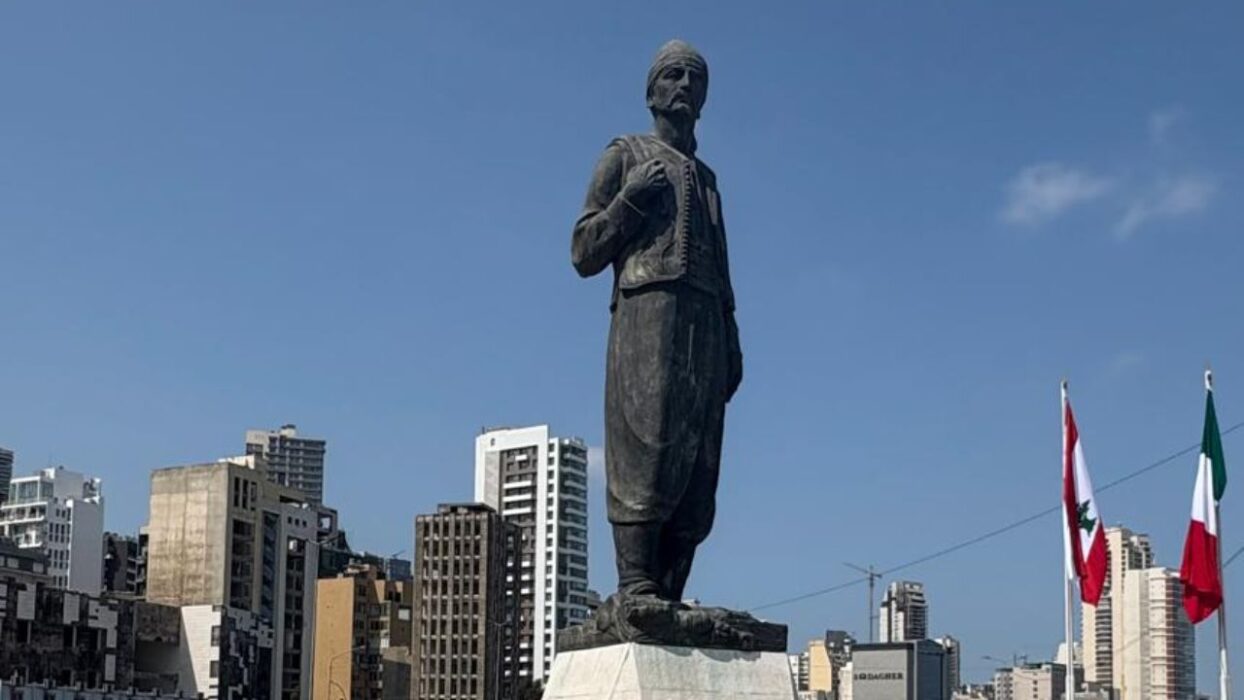
A few years ago, someone on Reddit’s r/lebanon forum asked a question that has probably crossed the minds of many people who drive past Beirut’s port: “What’s the story for the Mexican flag in front of the port in Beirut?” They had been “driving past it for years and always wondered why it’s there next to a statue.” The answer is more than 130 years old. It runs from the port of Beirut to the port of Veracruz, and it tastes a lot like tacos árabes.
The statue depicts a man in traditional Lebanese dress and is called the Monument to the Lebanese Emigrant. Its twin stands in Mexico, and Lebanese Mexicans brought it home to Beirut, where, according to that Reddit user’s account, a Mexican flag has kept it company ever since.
The statue in Beirut has twins all over Mexico
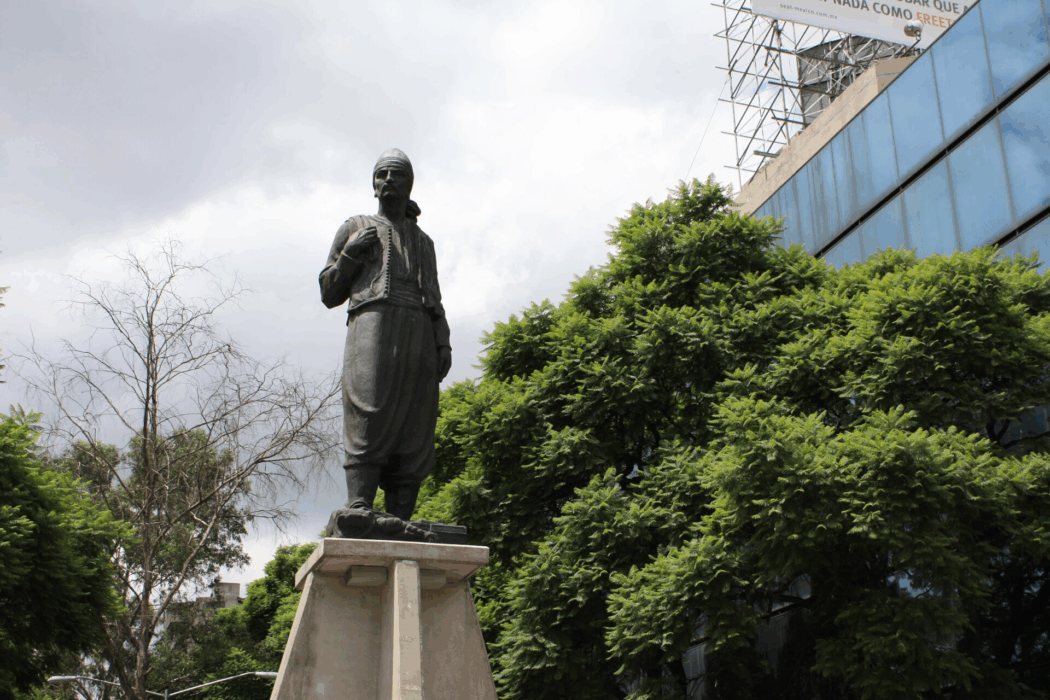
The monument began with Mexico City’s Centro Libanés, the Lebanese community club, which decided in 1970 to honor “those who arrived from the lands of the cedar,” according to México Desconocido. The sculptor, Ramis Barquet, is Lebanese. Replicas now stand in Mexico City, Mérida, and the port of Veracruz, and Wikipedia also lists monuments to Lebanese migrants in Chihuahua and Monterrey.
The Beirut copy closes the circle. According to the Lebanese outlet The961, Mexicans of Lebanese descent erected it in Beirut in the early 2000s, in front of the same port their ancestors sailed from. The English-language magazine The Eye in Huatulco calls the Veracruz statue and its Beirut twin “the starting and ending points of the Lebanese diaspora in Mexico.”
The statue came through Beirut’s darkest recent chapter almost untouched. On August 4, 2020, the port explosion heavily damaged the surrounding area, but the 3.5-meter sculpture escaped serious damage, according to The961. Ten months later, the Mexican Embassy celebrated the site’s restoration, with support from Mexico City’s Centro Libanés. Mexico’s ambassador to Lebanon, José Ignacio Madrazo, called the statue “a salutation and an expression of the will to receive refugees that Lebanon and Mexico share.”
Lebanese families were arriving in Mexico before Lebanon was a country
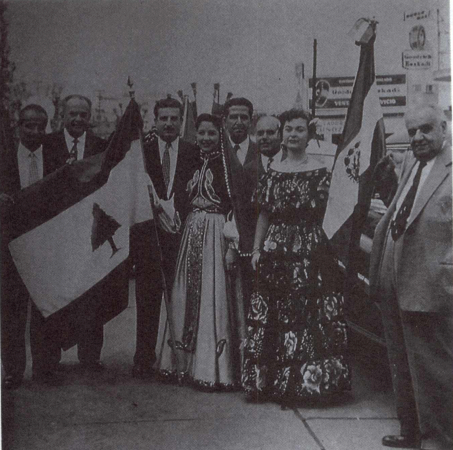
The first Lebanese immigrants landed in Mexico in 1892, aboard a French ship that sailed from Beirut, according to The Eye. Some accounts place the first arrivals as early as the 1870s, and Mexico News Daily cautions that “it’s impossible to know when the first Lebanese immigrant set foot on Mexico’s shores.” Either way, they came from a place that did not yet exist as a nation. Mount Lebanon was part of the Ottoman Empire, and after World War I, France took control. Lebanon won its independence in 1943.
They left for both political and economic reasons. Habib Chamoun, an author and professor who studies the Lebanese diaspora, told Mexico News Daily that he remembers hearing stories within the community of young men who were pressed into Ottoman military service against their will. He also points to the 1869 opening of the Suez Canal, which contributed to the collapse of Mount Lebanon’s silk industry in the 1890s. Meanwhile, Mexican officials had little idea who was arriving. “All Middle Eastern immigrants who entered into [Mexico] before World War I were considered Turks,” the scholar Zidane Zeraoui writes.
They landed at Progreso, Veracruz, and Tampico. They first settled in the Yucatán and along the Gulf coast, then across northern Mexico and in the capital. Many started as roving vendors and shopkeepers. According to Chamoun, they offered customers credit, which was uncommon at the time, and they mixed easily with both poor rural farmers and the elite, earning goodwill across Mexican society. By the 1930s, according to The Eye, the Lebanese made up only about 5% of Mexico’s immigrants but accounted for roughly half of immigrant contributions to the country’s economy.
Estimates of how many Mexicans have Lebanese roots today vary. Mexico City’s government puts the number at about half a million, and Mexico News Daily at close to 600,000. The two countries established diplomatic relations in 1945. They kept embassies in each other’s capitals for decades, except between 1982 and 1996, when Lebanon’s civil war closed them, according to Mexico City’s government. For the 75th anniversary of relations in 2020, Beirut lit up its National Museum in the colors of the Mexican flag. So Beirut has worn Mexico’s colors more than once.
Tacos árabes grew out of Lebanese shawarma, and al pastor’s origin story is complicated
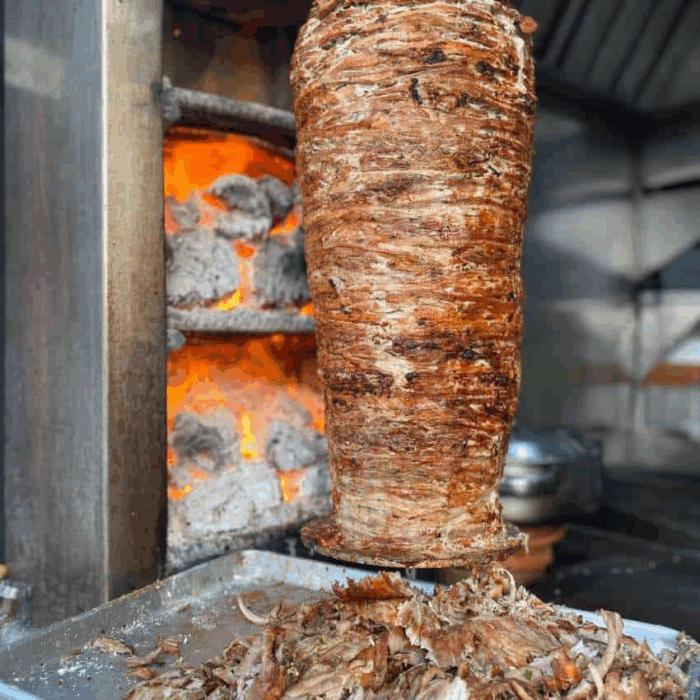
Puebla’s tacos árabes are one of the most delicious traces of this friendship. Latino Foodie describes them as a Middle Eastern shawarma: marinated meat cooked on a spit, sliced into a pan árabe or a thick flour tortilla, and topped with onion and red salsa. In Mexico, pork replaced lamb.
The internet also loves to say Lebanese immigrants invented tacos al pastor. In that same Reddit thread, one user wrote that the statue depicts “the muhajir who invented the Al pastor taco.” The truth is murkier. Wikipedia credits Lebanese Mexicans with creating al pastor, but Mexico News Daily says its origins “are actually linked to two Iraqi families in Puebla.” According to Latino Foodie, the rotating spit itself is the Middle Eastern influence that became a hallmark of Mexico’s hole-in-the-wall taquerías.
The influence runs deepest in the Yucatán, where the first Lebanese arrived. In Mérida, street vendors sell kibbe bola, ground meat and seasonings wrapped in a crusty ball of fried dough and topped with fresh cabbage and habanero salsa, according to Mexico News Daily. Vendors there pronounce it “kipe” or “kepe,” Latino Foodie notes. They also sell taquitos de parra, stuffed grape leaves that, in southern Mexico, are often made with cabbage instead because grapevines are hard to come by. Mexicans have long made Lebanese dishes like jocoque, a thick, strained yogurt, and ensalada árabe, a fattoush with toasted pita and sumac.
In Lebanese Mexican homes, those dishes still carry family memory across generations. “For special occasions like New Year’s or a birthday celebration, it was always Lebanese food,” Andrea Sayeg told Mexico News Daily. Sayeg is third-generation Lebanese Mexican and opened the Lebanese taco shop Alay Alay in 2021. “I remember my great aunt used to dip our pacifiers in café arabe.”
Saint Charbel crossed the ocean too, and in Mexico he gets ribbons
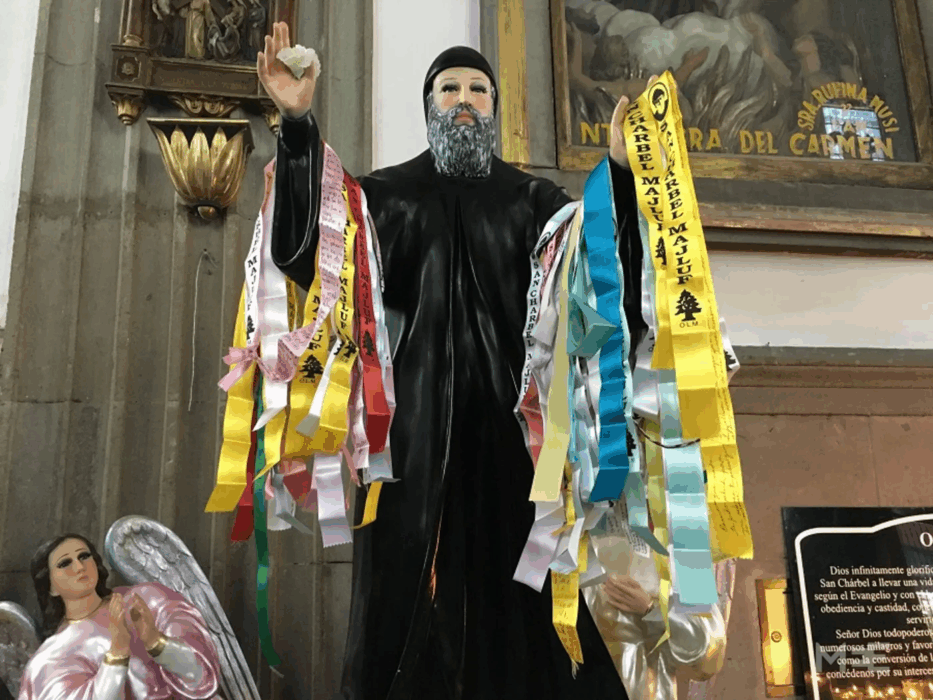
Most early Lebanese immigrants were Maronite Christians, and they brought along the saint the Eye calls “the ‘miracle monk of Lebanon,'” Charbel Makhlouf. He arrived in Mexico with immigrants in the early 1900s, decades before the Catholic Church beatified him in 1965 and canonized him in 1977. In Mexico, his followers began their own tradition. People tie listones, long ribbons inscribed with prayers and requests, to his statues, a custom Wikipedia says began at the Candelaria church in Mexico City’s historic center. According to Mexico City’s government, images of Saint Charbel are so common in some parts of the city that they signal you’re in a neighborhood of families who trace their roots to Lebanon.
Mexico City’s Maronite community worships at the Valvanera Cathedral in the historic center. There, Mexico News Daily reports, you can still hear the blessing of the sacramental wine and wafers in Aramaic. Lebanese Muslims also left their mark, building the first dedicated mosque in Mexico, the Suraya Mosque in Torreón, Coahuila, in 1989, according to The Eye.
Some of Mexico’s biggest stars have Lebanese roots
The best-known Lebanese Mexican is Carlos Slim Helú, who was the world’s richest person in the early 2010s, according to The Eye. He named Mexico City’s Soumaya Museum after his late wife, Soumaya Domit. A broader list of Mexicans with Lebanese origins reads as a Mexican awards show: Salma Hayek, Demián Bichir, Gaspar Henaine and Mauricio Garcés, Susana Harp, Miguel Layún, and yes, Peso Pluma.
So the next time Peso Pluma comes on while someone orders tacos árabes, you’re hearing and tasting the same story.
Mexicans and Lebanese share a table, and everything on it
The way the two cultures eat may be what they share most: together, with too much food, and someone always insisting you take more. Mohamed Badar arrived in Mexico in 2005 and opened the Lebanese restaurant El Jamil in Mexico City’s Condesa neighborhood.
“Lebanese food is about sharing,” Badar told Mexico News Daily. “No one orders a dish for just themselves unless they are dining alone. You share the bread. You share everything.”