
If You Ever Wondered Why We Call It ‘Soccer’ in America, You Should Thank a Group of Oxford Frat Boys
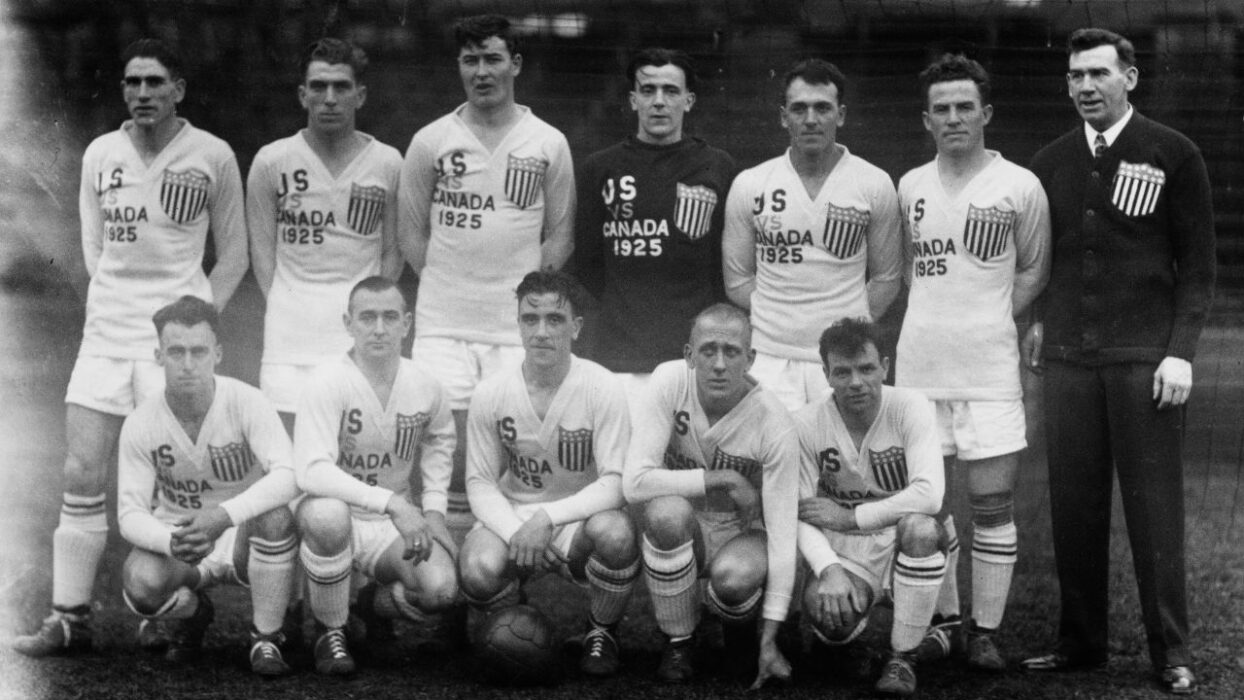
The United States and Canada are co-hosting this year’s World Cup, alongside Mexico. However, in the former two, the sport the rest of the world calls football goes by a different name. The assumption is always the same: “soccer” must be some clumsy American invention. Maybe a substitute dreamed up by a country that already had its own football. Well, it is not. The word is actually British. It was coined by the kind of people the British have spent generations making fun of: rich college kids at Oxford.
Why Do Americans Even Call It “Soccer”?
Stefan Szymanski, an emeritus professor at the University of Michigan who grew up in England in the 1960s and 1970s, told the BBC that the whole “football versus soccer” debate struck him as strange. “When I was a child in England, the word ‘soccer’ was perfectly acceptable,” he said. Szymanski added that when he started asking friends about it, the consensus was that nobody in the 1970s thought the word was a problem.
That confusion turned into research. Szymanski found that football was originally a very posh sport. “The people who founded the Football Association in England in 1863 were Oxford graduates who had attended elite public schools,” he told the BBC. Back then, he said, “there were two games: one called rugby football, at that time, and the other called association football.”
Blame a Bunch of Posh British College Kids for the Word
Wealthy university students in the 1880s and 1890s had a habit of shortening words and tacking “-er” onto the end as a kind of slang, Szymanski explained. Breakfast became “brekker.” Rugby football became “rugger.” Association football got the same treatment: students pulled “soc” out of the middle of “association,” added the “-er,” and “soccer” was born. What’s more, the word briefly passed through an intermediate form, “assoccer,” on its way there.
Nobody can prove exactly who said it first. Sports historian Andy Mitchell has pointed to “at least” three examples of “soccer” or “socker” appearing in school magazines in late 1885 in different parts of England. The Athletic points to an even earlier trace: an unsigned letter in The Oldhallian, an Oxford alumni periodical, that in 1885 called a match “pre-eminently the most important ‘socker’ game played in Oxford this term.”
The most popular version of the story credits a specific student, Charles Wreford-Brown. He went on to become a senior figure at the Football Association. As the story goes, he was having breakfast at Oriel College when a friend asked him to play “rugger” after “brekker.” He replied that he was going to play “soccer” instead, according to an account from Geoffrey Green’s book “Soccer: The World Game,” cited by The Athletic. The media itself cautions that the anecdote may be apocryphal, more likely a “neat peg” for a word that was probably already circulating in those circles. Szymanski is just as careful with the BBC. He says, “No one is entirely sure,” even though the documentary trail clearly leads back to Oxford.
Football Was the Fancy Word First, Believe It Or Not
For a while, both words lived comfortably in England. British newspapers preferred “football” but continued to use “soccer” well into the 1980s. As football grew into the sport of the working class, “soccer” survived mostly among highbrow newspaper columnists. They wanted a quick way to differentiate it from rugby. Eventually, one of the country’s most popular football shows was even called “Soccer AM.” Eventually, “football” pulled ahead for good in England, while “rugby football” simply became “rugby.”
Why America Never Let Go of the Word “Soccer”
The word followed the sport as it spread to other countries. And “soccer” is still common today in Australia, New Zealand, South Africa, and Canada. The United States needed it more than most because “football” was already taken. American football developed in the late 19th century by borrowing elements from both rugby and association football. And Szymanski told the BBC that the two are “like close cousins” that emerged around the same time the word “soccer” was being coined. As American football grew more popular, soccer became the obvious way for American association football players to describe their own sport.
That clarity took decades to show up in official names. The United States Football Association was formed in the 1910s as the official organizing body of American soccer. It changed its name to the United States Soccer Football Association in 1945, eventually dropping “Football” altogether. The Athletic pins the final change to 1974, when the organization became the United States Soccer Federation, the name it still carries today. Authors Andrei Markovits and Steven Hellerman wrote in their book “Offside: Soccer and American Exceptionalism,” cited by The Athletic, that the slow renaming reflected the sport’s struggle to “find a distinct identity for soccer that was American, yet also apart from the behemoth of American football.”