
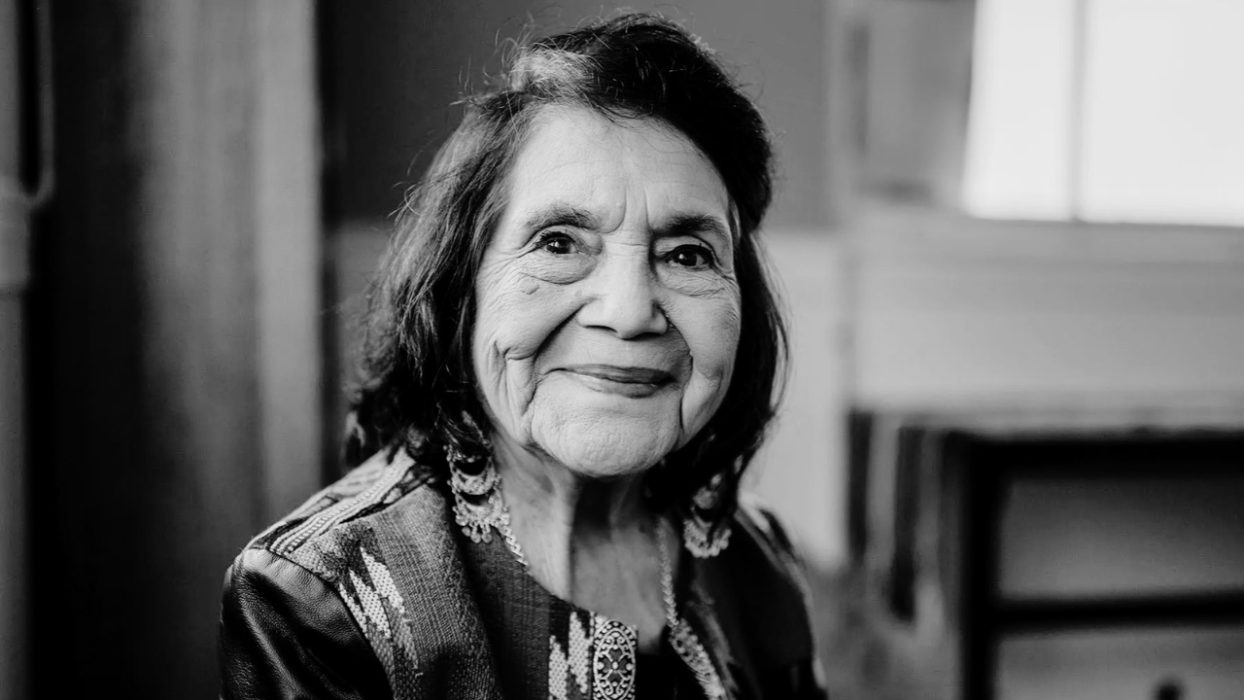
Farewell, Dolores Huerta: The Fearless Woman Who Taught Generations to Believe “Sí, Se Puede”
Dolores Huerta, co-founder of the United Farm Workers, icon and hero of Latinos everywhere, who ingrained her words, “Sí, se puede,” in the collective history of the country, died Wednesday at her home in Bakersfield, California. She was 96.
Her family announced her death on Instagram. “We are deeply saddened to announce that our beloved mother, Dolores Huerta, has passed away today at the age of 96,” the family wrote. “As you can imagine, this is an incredibly difficult time for us, and we ask for privacy as we grieve this incredible loss to our family. We know that many of you around the world share in our mourning, and we will be following up on plans to recognize and celebrate her incredible life and legacy.”
The cause was cancer, Erik Olvera, a spokesman for the family, told The New York Times.
Huerta spent more than 70 years organizing, first for farmworkers in California’s fields and later for immigrants and women across the country. In March, she revealed that César Chávez, her co-founder at the union, had sexually abused her in the 1960s, a secret she said she had kept to protect the movement.
Dolores Huerta Learned From a Mother Who Fed Farmworkers
Huerta was born Dolores Clara Fernández on April 10, 1930, in Dawson, a mining town in northern New Mexico. Her father, Juan Fernández, was a coal miner who became a union leader and a member of the New Mexico Legislature.
After her parents divorced, her mother, Alicia, moved the family to Stockton, California. Alicia worked as a waitress, cannery worker, and cook, then bought a hotel where she sometimes took in migrant workers and fed them for free.
“My mother was a strong woman, and she didn’t favor my brothers,” Huerta told Susan Ferriss and Ricardo Sandoval-Palos for their 1997 book “The Fight in the Fields.” “There was no idea that men were superior. At home, we all shared equally in the household tasks.”
She earned a teaching certificate in Stockton and taught elementary school, but she left the classroom after about a year. She was shocked to see farmworkers’ children arrive at school hungry and barefoot. “I thought I could do more by organizing farmworkers than by trying to teach their hungry children,” she once said, according to the Los Angeles Times.
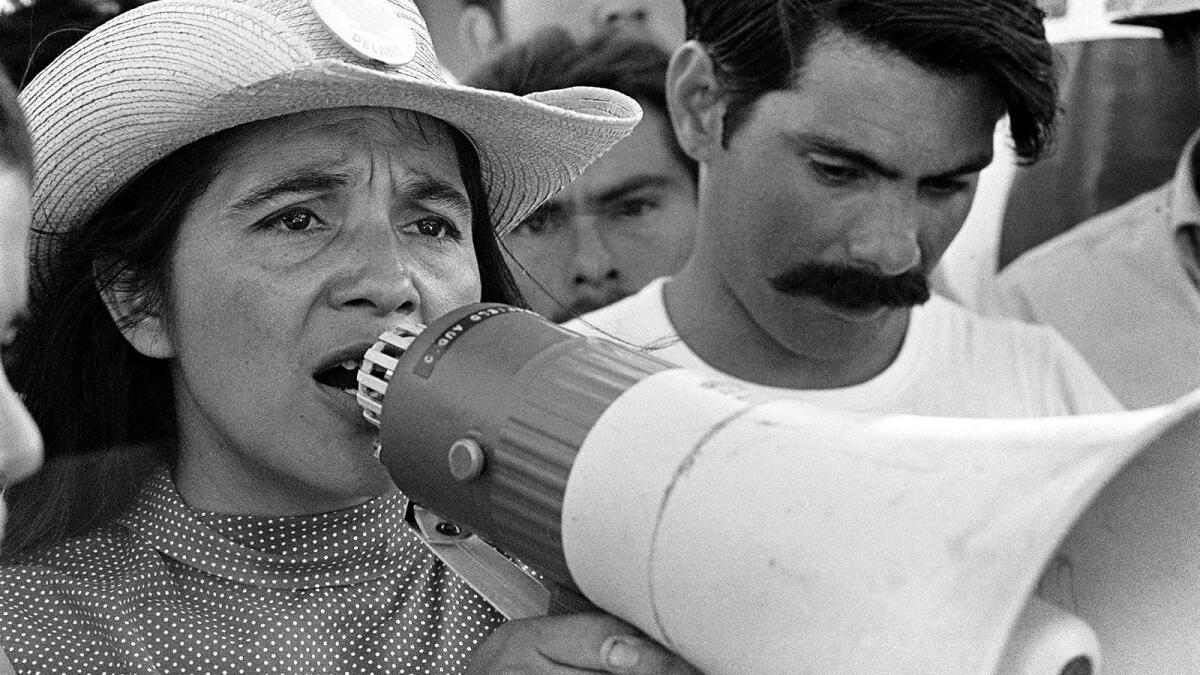
Dolores Huerta Took the Grape Boycott All the Way to New York
In her 20s, Huerta joined the Community Service Organization, a Latino civil rights group in California. Through it, she met Chávez in 1955 at a fundraising dinner in Oakland, where CSO co-founder Fred Ross Sr. introduced them.
In 1962, the two founded the National Farm Workers Association, which later became the United Farm Workers. “People thought we were crazy,” Huerta later told The Salt Lake Tribune. “They asked: ‘How are you going to organize farm workers? They are poor, powerless immigrants. They don’t have any money, and they can’t vote.’”
In 1965, the association joined Filipino workers in a five-year strike against table-grape growers around Delano, California. Huerta helped negotiate the union’s early contracts, including a 1966 agreement with the Schenley Wine Co. that, according to the union’s history, was the first labor agreement farmworkers won on their own from an agricultural company.
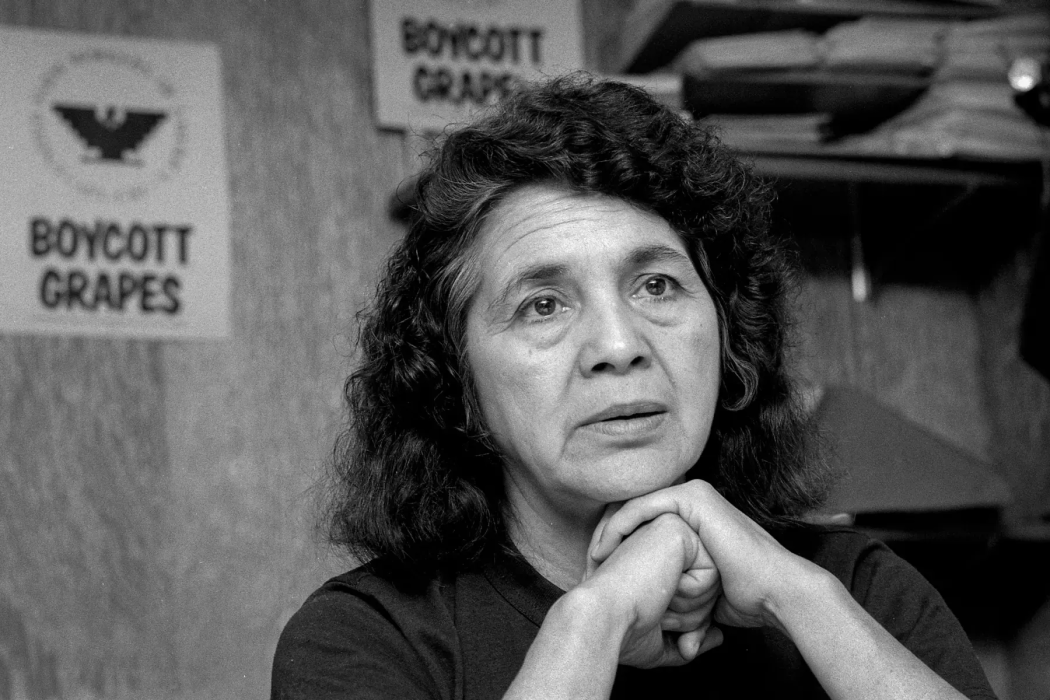
She also moved to New York to organize the national grape boycott there. According to polls the Times cited, 17 million households backed the boycott, and in 1970 the Delano growers signed contracts with the union. In 1975, California Gov. Jerry Brown signed the Agricultural Labor Relations Act, which guaranteed the state’s farmworkers the right to unionize and required employers to bargain in good faith.
Chávez once called her “totally fearless, both mentally and physically,” according to the Los Angeles Times. Eliseo Medina, whom Huerta helped recruit as a 19-year-old grape picker and who later became international secretary-treasurer of the Service Employees International Union, said, “Dolores had a gift for making you believe in yourself. She could inspire you and urge you to do things you never thought possible. She is one of those life-changers.”
Huerta was arrested 22 times. In 1968, she was at the Ambassador Hotel in Los Angeles the night Sen. Robert F. Kennedy was shot. In 1988, a San Francisco police officer beat her with a baton during a protest against then-Vice President George H.W. Bush, breaking her ribs and rupturing her spleen. She won a settlement from the city and, the Times reported, used the money to benefit farmworkers after Chávez pressured her.
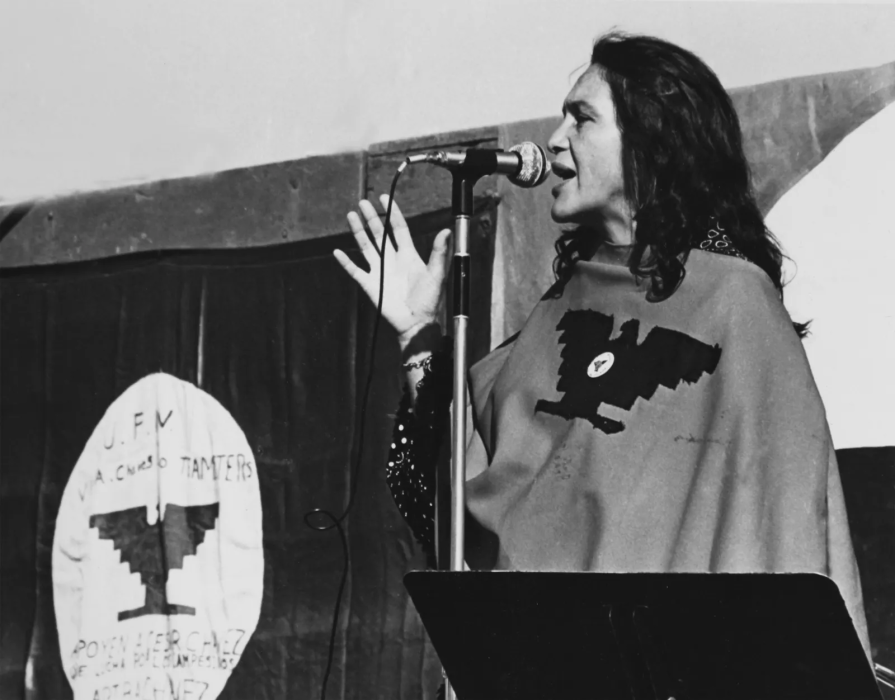
The Woman Who Made Us All Believe “Sí, Se Puede”
The phrase has inspired everyone from farmworkers to presidents, dating back to 1972, when the union fought an anti-union law in Arizona, and some doubters said it would lose. Huerta answered, “Sí, se puede.”
Immigration reform advocates took up the chant in 2006, and Barack Obama ran for president in 2008 under its English translation, “Yes, we can.” When he met Huerta, he told her, “I stole your slogan,” according to WBNS. In 2012, he awarded her the Presidential Medal of Freedom, the country’s highest civilian honor.
“The great social justice changes in our country have happened when people came together, organized and took direct action,” Huerta said as she accepted it. “It is this right that sustains and nurtures our democracy today.”
In 1993, she became the first Latina inducted into the National Women’s Hall of Fame. In 1998, President Bill Clinton gave her the Eleanor Roosevelt Human Rights Award.
Fighting Sexism Inside Her Own Movement
Huerta was one of the few women in many union halls and boardrooms. She spent four months in Washington lobbying for the Immigration Reform and Control Act of 1986, which granted legal status to millions of undocumented immigrants. Still, nobody told her about the news conference to celebrate its passage.
“I realized afterward they just wanted to get me out of the way so they could take credit for the work,” she said of her male colleagues, according to the Times. “Straight male-chauvinist trick.”
“When I went to Delano (California) to work with the farmworkers, I had to tamp down my feelings about women in power because there was a different ambiance with the male dominance in the movement. There were a lot of women in the movement, but we saw we needed to be on the executive board,” she said in 2017, according to NBC News. “The feminists helped me understand why it was important for women to be able to have control of their bodies and control of their lives.”
After recovering from the 1988 beating, she took a leave from the union and spent two years traveling for the Feminist Majority Foundation to promote women running for office. She later mentored elected officials including Hilda Solis, who became President Obama’s labor secretary and the first Latina to serve in a cabinet. At the 2008 Democratic National Convention, Huerta placed Hillary Clinton’s name in nomination for president.
A Heavy and Painful Silence
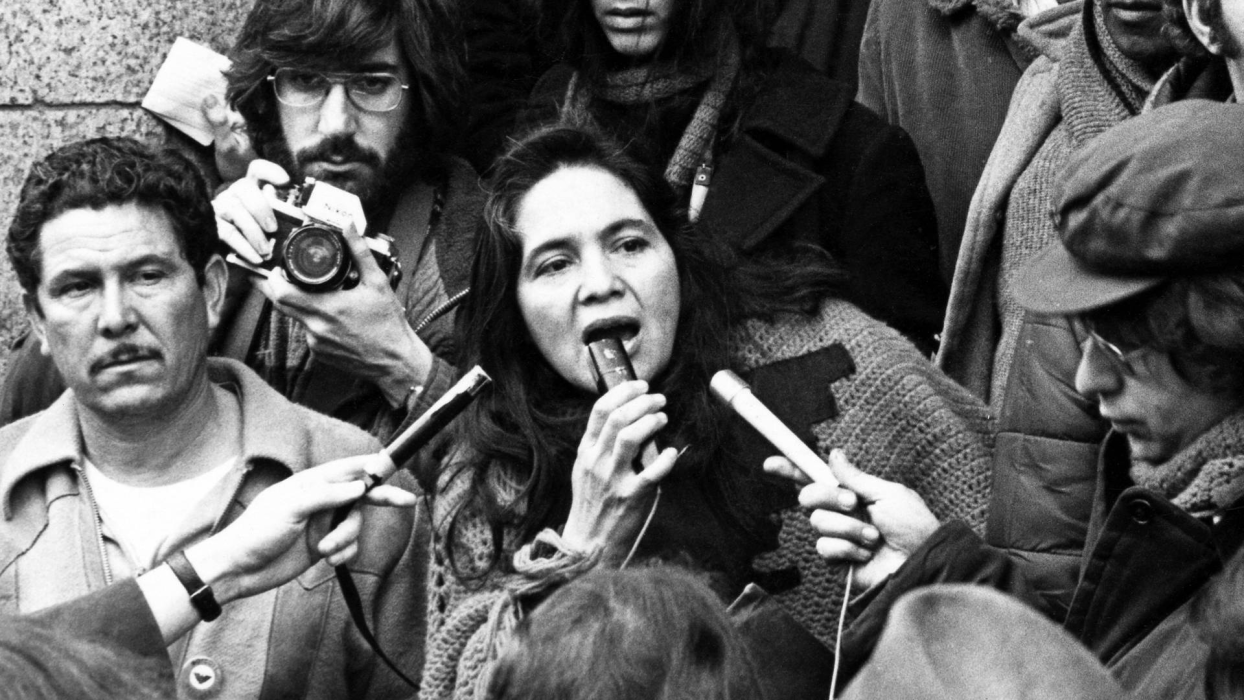
In March 2026, The New York Times published an investigation that reported extensive evidence that Chávez, who died in 1993, had groomed and molested girls as young as 12. As part of that reporting, Huerta told the Times that Chávez had pressured her into sex in 1960 and raped her in 1966 inside a vehicle in a secluded grape field. She said she had two daughters from their encounters and arranged for others to raise them. She said she had not known about his abuse of girls.
“I saw him, again, as my boss, as my hero, as, you know, somebody that would do the impossible,” she told the Times. “I never talked about it to anybody, and the reason I didn’t is that I just didn’t want to hurt the movement.”
In a statement, she said, “I carried this secret for as long as I did because building the movement and securing farmworker rights was my life’s work. I have never identified myself as a victim. Still, I now understand that I am a survivor — of violence, of sexual abuse, of domineering men who saw me, and other women, as property, or things to control. My heart aches for everyone who suffered alone and in silence for years.”
“Cesar’s actions do not diminish the permanent improvements achieved for farmworkers with the help of thousands of people,” she said. “We must continue to engage and support our community, which needs advocacy and activism now more than ever.”
The Times also reported that interviews with former union associates and archived records suggested several women had complained at the time that Huerta often failed to back them when they raised sexism.
Latino civic and advocacy organizations praised her for speaking out. Some schools that removed Chávez’s name considered taking hers, the Los Angeles Times reported. In May, she attended the dedication of “Walking into History,” her new mural by artist Robert Vargas in downtown Los Angeles, in her first public appearance since coming forward.
Dolores Huerta Never Really Retired
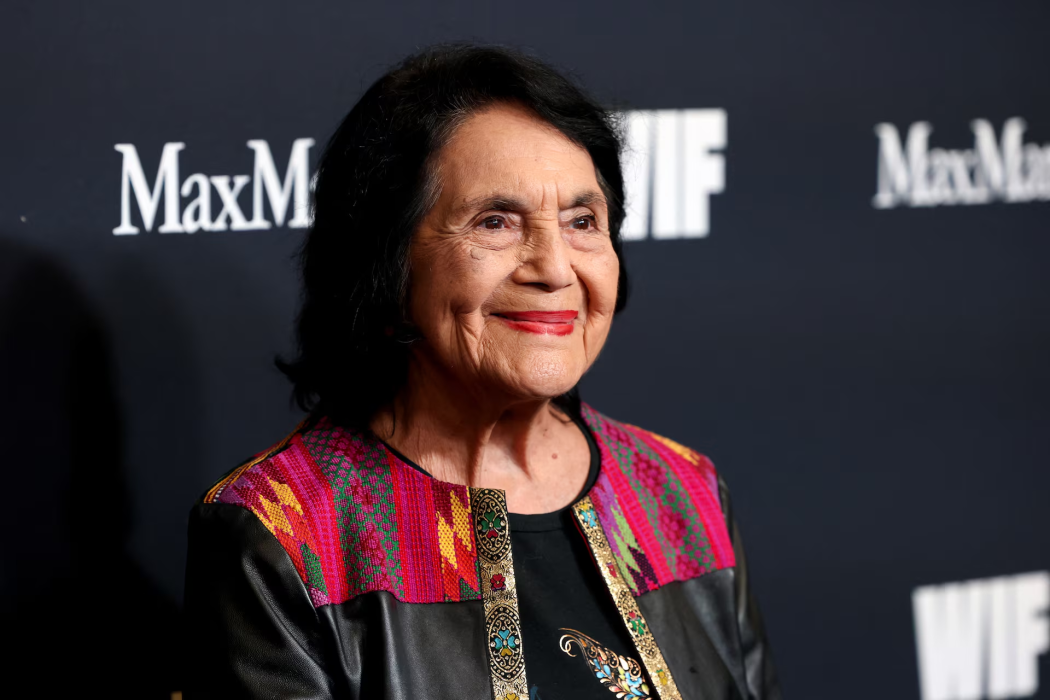
Huerta stepped down as an officer of the United Farm Workers in 1999, after 37 years. In 2002, she founded the Dolores Huerta Foundation, which helps communities organize local projects in health, education, and the environment and registers voters.
At 89, she was arrested in Fresno while protesting for better pay for home health care workers. In 2025, one of her nonprofits broke ground on the Dolores Huerta Peace & Justice Cultural Center in Bakersfield, a $35 million project funded largely by the state of California that will include an academy for future organizers. “They are the ones who are going to guide us forward,” she told the crowd, according to the Los Angeles Times.
The 2017 documentary “Dolores,” directed by Peter Bratt, was about her life. In 2019, California Gov. Gavin Newsom proclaimed an annual Dolores Huerta Day.
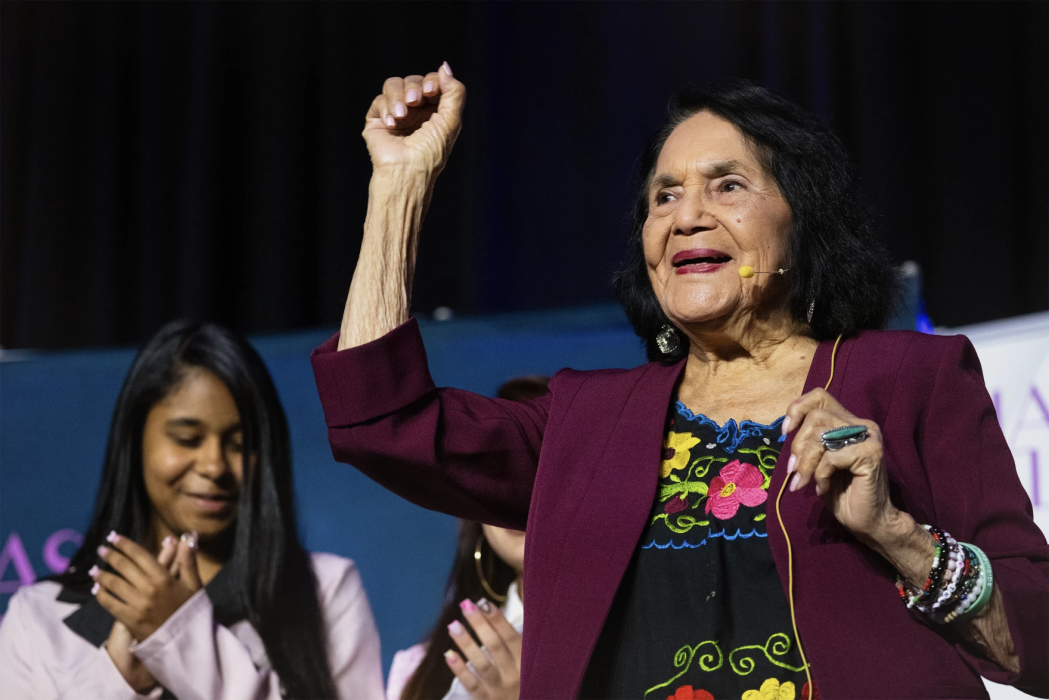
Huerta had two daughters with her first husband, Ralph Head, and five children with her second husband, Ventura Huerta, whose last name she kept. Her longtime partner, Richard Chávez, was César’s brother. They had four children together, and he died in 2011, according to NBC News. Her survivors include 13 children, 24 grandchildren, 23 great-grandchildren, and seven great-great-grandchildren.
“We understood very quickly she wasn’t ours to have,” her son Emilio Huerta said, according to the Los Angeles Times. “She sort of belonged to the farmworker movement. And it was our job to support her.”
In a 2020 interview, the Times asked Huerta why movements like hers crossed borders. “I think it’s because of the people who are involved,” she said. “And this is the reason I, at the age of 90, continue to work. When people come together and take collective action, whether it’s in a march, whether it’s in a union election, or, most important, come together to vote, this is how we make change.”