
Marriage, Green Cards, and Social Media: What’s Changing in U.S. Immigration This Month
Es has lived in the United States for thirty years. She holds a green card, and she is married to a U.S. Army soldier. Last year, she filed for citizenship. Her application has not been reviewed. She was born in one of the 39 countries subject to a travel ban. And the administration has made no exception, not even for the spouses of active-duty service members, according to NPR. The couple had planned to move to Germany this month. They pushed the move to October. The house, the children’s schooling, her husband’s military readiness, all of it is in limbo.
“This is not impacting people who have done anything wrong,” she told NPR. She spoke on the condition of anonymity because her husband is in the Army and her case is pending. “This is impacting everyone.”
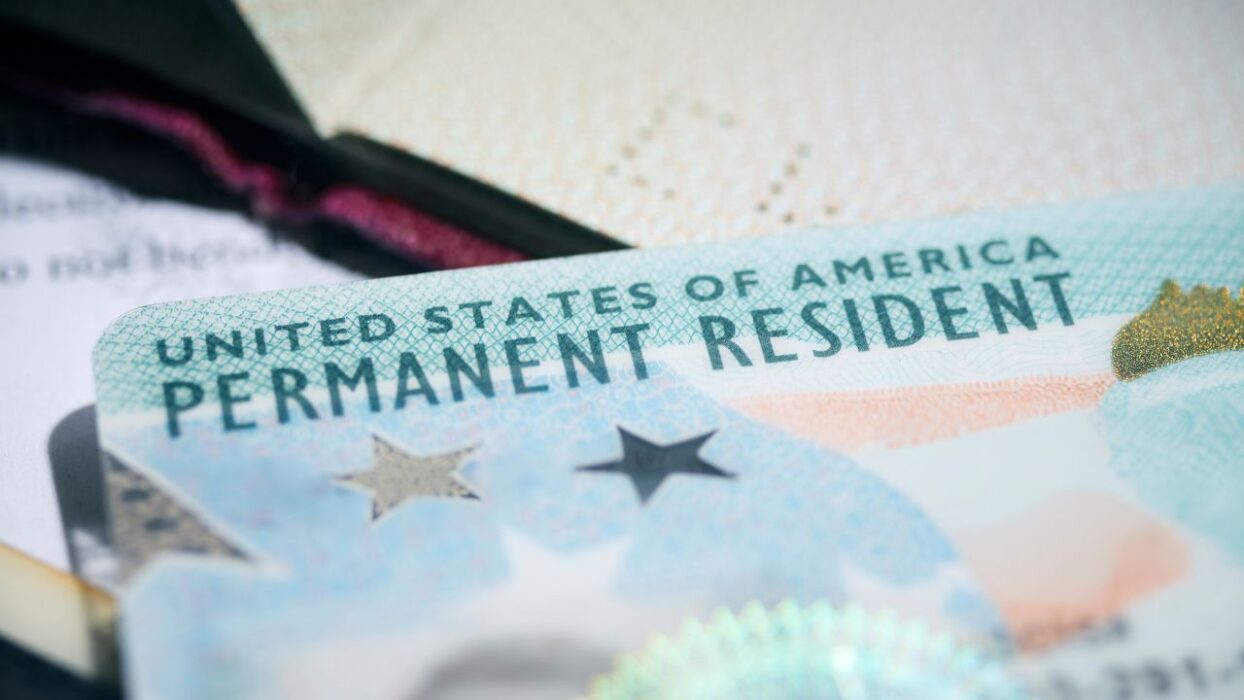
July 2026 brings a series of policy changes affecting legal immigration. These include green cards, citizenship applications, and the pathways that hundreds of thousands of people already living in the United States depend on. Some took effect this month. And some are just days away. All of them are life-changing for millions.
Spouses of U.S. Citizens Occupied a Protected Place Under Immigration Law. The Administration Changed That.
Under U.S. immigration law, immediate family members, including spouses, have historically held a distinct legal position. They are not subject to immigrant quotas. Nor do they need to have maintained legal status to apply for adjustment. Courts and policymakers had long treated them as what Sharvari Dalal-Dheini, senior director of government relations at the American Immigration Lawyers Association, called “a privileged class.”
“This administration is treating them like all other immigrants,” Dalal-Dheini told NPR.
About 343,000 people received green cards through their spouses in 2024. This represents roughly a quarter of all green card approvals, according to data released by the Department of Homeland Security. That number doubles when accounting for other immediate family members who can sponsor immigrants, like children and parents. The marriage pathway runs through millions of American households.
Now, things have changed.
USCIS officers are now conducting more interviews. A memo issued in May instructed officers to consider whether a spouse had returned to their home country to apply for a green card when reviewing their case. Those who remain in the United States may face longer, more intrusive vetting, according to NPR. The Trump administration has also asked financial institutions to review the bank accounts of people in the U.S. without permanent status.
USCIS spokesman Zach Kahler left no room for doubt in a statement to NPR: “A pending or approved Form I-130, Petition for Alien Relative, does not confer any immigration status. All aliens are expected to comply with U.S. immigration laws. Those who entered without inspection or who remain in the United States beyond their permitted stay are illegal aliens who may be subject to immigration enforcement action.”
Being married to a U.S. citizen and having a petition in process does not shield someone from deportation.
Ashley DeAzevedo, executive director of American Families United, which advocates for U.S. citizen spouses and family members in various immigration processes, told NPR the organization now counts about 1.4 million people seeking its support inside the United States, and about 300,000 outside, including people who have already left and those who want to come in. “We saw so many of our members make the decision to self-deport, to leave the country for fear of this indefinite detention,” she said.
On July 10, a Missing Signature Can Cost You Your Entire Application — and Your Filing Fee
Four days from now, a new rule from the Department of Homeland Security takes effect. Under an interim final rule issued by DHS, USCIS will have broader authority to reject or deny applications that lack a valid signature.
Two details make this rule significant. First, the government can deny cases even after they have been accepted for processing. Meaning, the agency can reject something it already took in and began reviewing. Second, USCIS may retain filing fees in those cases. Applicants who lose an application under this rule would be required to start over with a new application and pay a new fee.
Federal officials have described the change as a standardization of existing filing requirements. Immigration attorneys say it raises the cost of any administrative error in a system that was already difficult to navigate.
The July Visa Bulletin Has Closed Certain Employment Green Card Categories for the Rest of the Year
Each month, the State Department releases a Visa Bulletin that determines who can move forward with green card applications based on annual caps. The July 2026 bulletin has closed two employment-based categories for the remainder of the fiscal year, which runs through September 30.
Employment-based second preference (EB-2) visas for applicants from India are no longer available until October. Unreserved EB-5 investor visas from India are also unavailable. No further approvals in those categories can be issued until a new fiscal year allocation opens.
USCIS is also continuing to use the more restrictive “Final Action Dates” chart for employment categories, which limits eligibility for adjustment of status to applicants whose priority dates fall within the current cutoffs. Family-sponsored categories saw more limited movement in July, advancing modestly but remaining subject to annual caps.
And for applicants whose cases are already pending, the current restrictions mean a longer wait at a minimum. For those who had been planning to file, the path forward has narrowed.
The New Immigration Forms Will Require Up to 10 Years of Social Media History, Including Deleted Accounts
USCIS has announced it will update immigration forms used for permanent residence, naturalization, and travel authorization. Although the government hasn’t yet released regulations for the new forms, USCIS indicated that the new forms will require applicants to disclose up to 10 years’ worth of social media handles, including accounts that have already been closed, according to Reuters. Applicants may also be asked to provide detailed information about immediate family members, including parents and siblings.
The requirement flows from an executive order President Trump signed on January 20, 2025, directing federal agencies to increase vetting of foreign nationals. The administration’s stated rationale, according to Reuters, is that immigration is a privilege, not a right. And that the government retains the authority to deny a visa, even to applicants who meet statutory requirements, if they deem granting it to be contrary to U.S. national interests.
What constitutes “anti-American” content has not been defined. Reuters reported that no clear guidance exists on what specific types of social media posts could be considered objectionable or contrary to U.S. interests.
Open questions remain: whether criticizing the administration counts, whether attending a political rally could serve as grounds for denial, and what happens if an applicant forgets to list an old account that the government later discovers.
The processing delays tied to social media review are already documented. H-1B and H-4 visa holders who traveled to India for visa stamping found their appointments — originally scheduled for November and December 2025 — rescheduled to March 2026 and beyond as consulates implemented new review processes. Some were stranded in India for months, unable to return to their jobs in the United States.
Attorneys Are Telling Clients the Uncertainty Is the New Normal
The cumulative weight of these changes — more interviews, the new signature rule, tighter visa supply, expanded social media disclosure — has produced what immigration attorneys describe as a destabilizing effect on clients who believed they were following all the rules.
Eric Welsh, an immigration attorney in California, told NPR that clients now must prepare for questions about when and how they applied for a green card, and must provide evidence of good moral character, requirements that were not previously standard for people seeking permanent residency or citizenship through marriage. “Spouses are vulnerable,” Welsh told NPR. “There’s no absolute right to remain, and there’s no absolute right to be afforded adjustment to status.”
DeAzevedo said the fear is shaping decisions. “This has had an absolute chilling effect on many people in this country and their desire to put their spouse in that position,” she told NPR.
The employment visa cutoffs are expected to be lifted on October 1, when the new fiscal year begins, and visa allocations reset, according to Newsweek. The broader policy direction — expanded officer discretion, heightened scrutiny of all applications, the marriage pathway treated like every other — carries no expiration date.
Es’ told NPR what it has cost her family. Her husband will be deployed thousands of miles away while their immigration case remains open. “He’ll be thousands of miles away, and he has to think about his job and will be worried about us,” she said. “And that is just not fair.”