
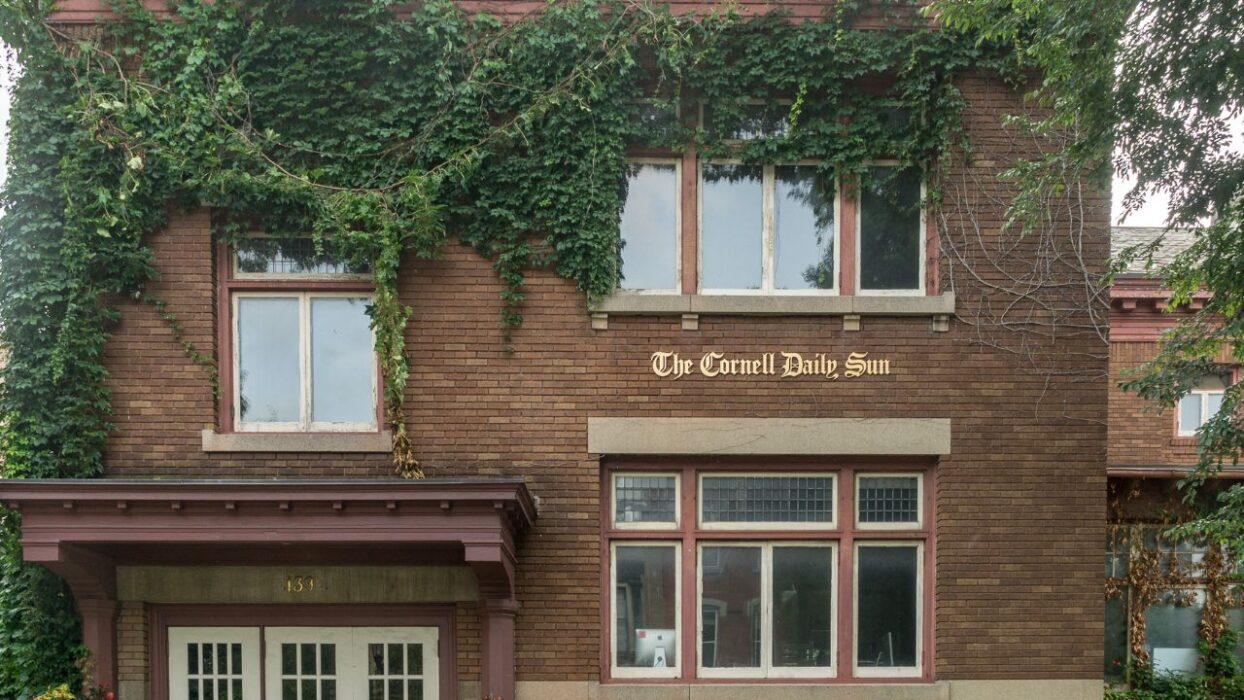
When Authorities Moved On From the Cornell Case, Student Journalists Didn’t: Why Local Journalism Can’t Disappear
It was students at The Cornell Daily Sun who first wrote about the alleged gang rape that occurred back in 2024 at the Cornell University Chi Phi frat house.
After the university’s Title IX committee ended its investigation after at least 12 hearings and Tompkins County N.Y. district attorney Matthew Van Houten declined to bring criminal charges against the alleged assaulters, saying the evidence did not support a sexual assault offense under New York State Penal Law, most of the outrage moved on.
Most, except for the Sun’s student journalists.
How Student Journalists Kept the Cornell Case Alive
22-year-old Cereese Qusba, a reporter with the Sun, built a relationship with Jane Doe and her lawyer about a year after the police filed the report. Qusba also interviewed university administrators and investigated research on Cornell’s sexual misconduct policy.
So when Jane Doe filed a lawsuit on Sept. 16 against multiple entities including Cornell University, her sorority, the Chi Phi Fraternity, and the seven accused men, Qusba was ready to publish her findings. This time with all seven men named: Matthew Ingalls, Johnathan Newell, Winston Lee, Gillio Lopes, Diego Sarabia, Scott Norris, and Scott Kretzschmar. Days later, editor-in-chief Sophia Dasser published the editorial “Cornell Won’t, We Will.”
The Sun’s journalists weighed whether to publish the names of the seven accused, since a grand jury had not yet criminally charged them or found them guilty.
However, Dasser has told outlets she concluded it was necessary to give the campus the transparency she felt the student body had not been afforded since the alleged incident two years prior.
At a time when the Trump Administration barred CNN, MS NOW and Politico from White House press access nearly two weeks ago, only to be reinstated after a district judge overturned the ban, journalism continues to stand the test of time.
After The Cornell Daily Sun published its findings and editorial outrage moved beyond the Ivy League campus to national coverage, New York prosecutors moved to reopen the investigation amidst an upheaval in criticism against campus police, prosecuting authorities, and Cornell.
On Friday, New York Governor Kathy Hochul removed DA Matthew Van Houten from the case and appointed New York Attorney General Letitia James.
Local Journalism Has Changed History Before
With examples such as the New York Times exposé on survivors recounting Harvey Weinstein’s sexual misconduct–one of the first landmark news stories catalyzing the #MeToo movement; KTLA being the first to air the video of Rodney King being brutally beaten by LAPD officers, sparking national outrage on race relations and police brutality; and The Washington Post breaking the Watergate scandal, which led to President Nixon’s resignation, no doubt journalism plays a major role in altering history, bringing information out of the dark and into the light.
Latino media is no different.
It was Univisión that aired its documentary Fast and Furious: Arming the Enemy, documenting the mismanaged firearm-tracking operation by U.S. federal agents that were directly linked to dozens of violent crimes and massacres by Mexican drug cartels.
Popular radio broadcaster Eddie “El Piolín” Sotelo organized his Spanish-language radio colleagues to inform listeners about the controversial immigrant enforcement legislation, the 2005 Sensenbrenner Bill, leading to a historic turnout of 500,000 to 1 million protesters on March 25, 2006, marching in Downtown Los Angeles against the bill. The Sensenbrenner Bill ultimately did not pass.
It was due to the small Puerto Rican local outlet Centro de Periodismo Investigativo, which published the 889 pages of leaked group chats between Governor Ricardo Rosselló and his top aides revealing misogynistic and homophobic remarks in addition to evidence of government corruption, that the Puerto Rican governor eventually resigned amid public protests.
These are but a few examples of how local journalism has been instrumental in organizing, mobilizing, and informing society, speaking up for the millions of anonymous Jane Does, John Does, and immigrants in the shadows, setting the course of politics and history.
From last year to now, journalistic platforms ranging from local papers and television stations to major media outlets like The Washington Post, NPR, The Associated Press, the BBC, and a plethora of others have either seen large funding cuts, an historic amount of layoffs, and shrunken newsrooms, causing an uptick in “news deserts,” including predominantly Latino areas like Salinas, California.
We know the seven names of those accused of alleged sexual assault in the Cornell lawsuit. Let’s also make sure we know the names of those who brought this information to a national stage: Cereese Qusba and Sophia Dasser, student journalists at the local Cornell Daily Sun.