
Olinia Uno: Mexico’s Answer to Expensive EVs Just Arrived, and It’s Under $9K
Despite having invented technologies that changed the world—such as color television, the birth control pill, and even the CAPTCHA—we Latinos are often told that innovation is reserved for other places. That we should be content with having assembly plants. But, boy, were they wrong.
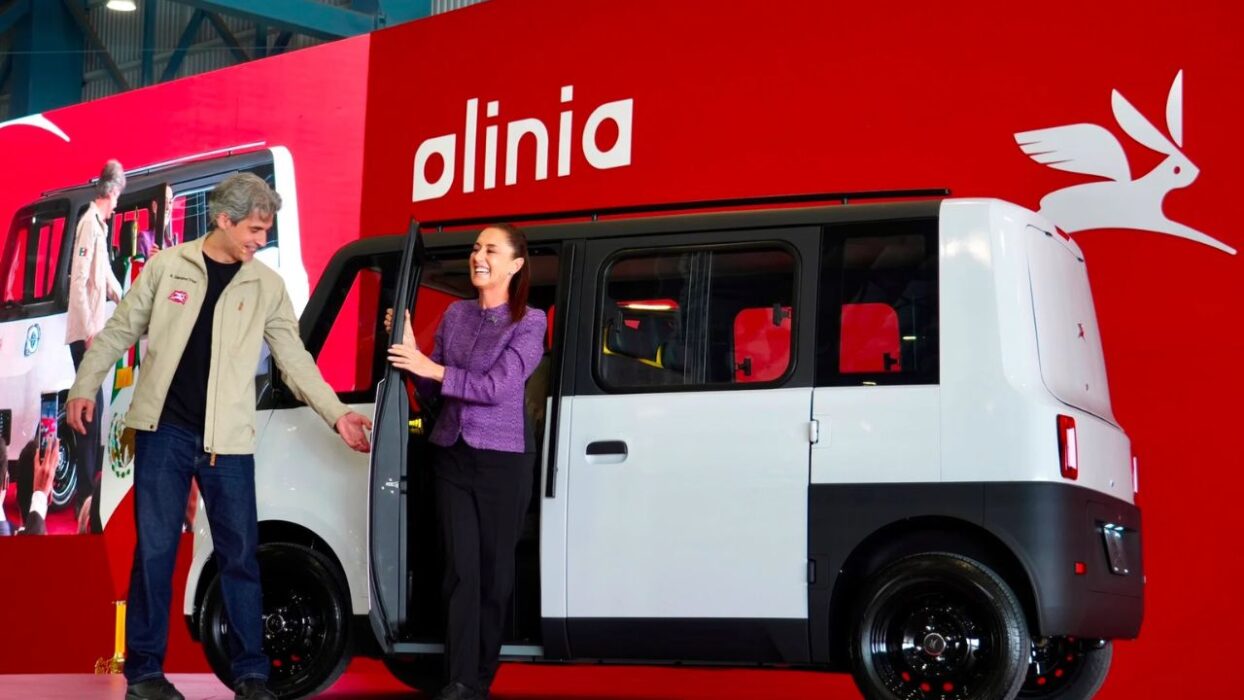
This is precisely what President Claudia Sheinbaum reminded us on June 7 when she drove a prototype electric car onto a stage inside a Mexican Air Force hangar near Mexico City. But not just any car. Mexico’s first domestically designed, engineered, and built electric vehicle. A car that costs around $8,600, seats six people, and was developed by more than 80 Mexican researchers, engineers, and students.
Her name is Olinia Uno. And she is about to change the game.
What Is Olinia, and Why Are We Already Obsessed
Olinia Uno is a compact urban electric car designed for real life. Not for billionaires, but for the common folk, the people working twelve-hour shifts in the city and needing reliable transportation that doesn’t cost a fortune to run.
According to The Autopian, the vehicle is realistically modest but entirely functional, designed for its intended purpose. A flexible, multi-use electric city car that does its job without pretension, the Olinia Uno is six seats of pure practicality.
The Olinia Uno costs 150,000 pesos, or about $8,600. But the best part is that it’s fully produced in Mexico and developed by Mexicans. And it is one of the most affordable electric vehicles on the market anywhere.
The Specs That Actually Make Sense for City Living
The Olinia Uno has a 14.7-kilowatt-hour lithium-iron-phosphate battery that provides over 100 kilometers of range. That’s about 62 miles on a single charge. If that sounds modest, remember that, according to the official operating scenarios, city residents driving about 60 kilometers daily will charge this car overnight and use it for their entire lives.
The motor generates 13 kilowatts of power and reaches a top speed of 50 kilometers per hour (about 31 miles per hour). According to The Autopian, the limited speed actually works in your favor. It keeps the vehicle focused on what it does best: city driving.
And the charging? You do not need a special station or an adapter. You plug it into any household outlet. At 110 volts, the standard Mexican household outlet, it takes eight hours. At 220 volts, it takes four hours. You charge it overnight while you sleep. According to Mexico News Daily, the car’s charging mechanism is compatible with the NACS standard, the same charger used by Tesla, meaning infrastructure is already being built.
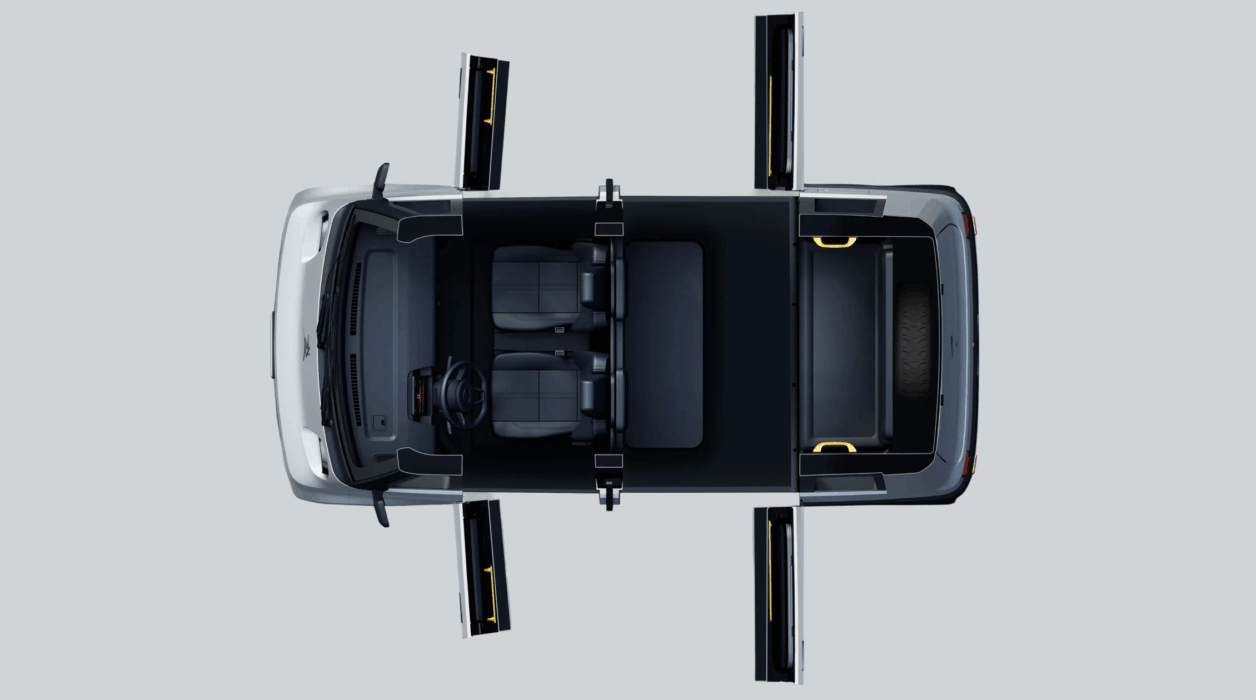
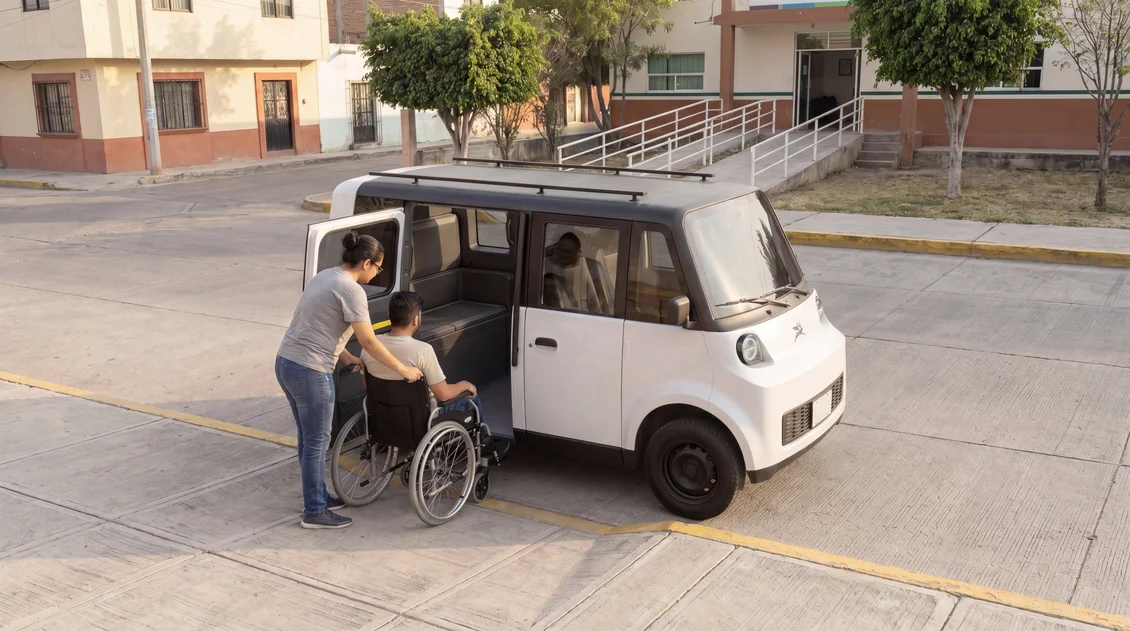
What’s more, the Olinia Uno fits six people. And the doors open wide enough that your abuela does not have to squeeze. The engineers even built a live demonstration showing that a wheelchair fits inside with room for an accompanying passenger.
The Cost Advantage That Changes Everything
Now, here’s the real game-changer. According to official government data, the operating cost is 49 centavos per kilometer. That is about $0.50 per kilometer.
To put that in perspective, according to official Olinia data, a conventional taxi costs 2.40 pesos per kilometer. A motorcycle costs about 1.18 pesos per kilometer. The Olinia Uno costs 49 centavos per kilometer.
If you drive 60 kilometers a day, which is typical for someone working in the city, your monthly operating cost is $900. Compare that to a traditional taxi at $4,320 per month or a motorcycle at $2,124 per month. You save between $1,224 and $3,420 every single month. According to Mexico News Daily, that means the vehicle essentially pays for itself through savings on fuel and maintenance.
President Sheinbaum announced that drivers could save up to 50,000 pesos, or about $2,900, annually compared to a combustion engine vehicle. The researchers behind the project call it a vehicle that generates the money to pay for itself.
Olinia Is Built by Mexicans, For Mexicans
The Olinia Uno was developed by the National Technological Institute of Mexico, the National Polytechnic Institute, and research centers of the Secretariat of Science, Humanities, Technology, and Innovation. Over 80 researchers contributed to the engineering center in Puebla. According to Electrive, the project is coordinated by SECIHTI and was developed over two years by researchers from some of Mexico’s most prestigious public institutions.
The current prototype is built with 50 percent domestic materials. By 2030, that number will reach 75 percent. Therefore, it creates an entire ecosystem of Mexican suppliers, engineers, and innovators that will sustain itself for decades.
And the branding is simply on point. Olinia comes from the Nahuatl word for mobility.
The Accessibility Features That Prove This Was Designed With Care
According to Mexico News Daily, the Olinia Uno was designed with Mexico’s rainy season in mind. The engine and battery have IP67 water resistance, which means they can handle puddles, rain, and floods. Beyond the wheelchair user space with an accompanying passenger, the handles are positioned for easy grip.
Inside, there is a 7-inch touchscreen with Bluetooth 5.0, USB-C charging ports for your phone, and a two-speaker stereo. The windows are electric, the locks are centralized, and steering has power assistance on every movement. According to the official Olinia website, this reduces resistance when turning and makes parking in tight spaces effortless.
What’s more, the cargo pickup truck variant, called Olinia Cargo, is coming next month. It was built with workers in mind, vendors who need reliable vehicles, the small business owners who cannot afford the fuel costs of traditional trucks, and the people for whom transportation makes all the difference.
The Wait Time Isn’t Unreasonable
Production begins in summer 2027. The assembly plant will be set up in Puebla by the end of 2026, with mass production starting in early next year. Initial manufacturing capacity is planned at 20,000 units annually, with expansion targets of 50,000 vehicles within four years and up to 100,000 units per year at a later stage.
The Mexican government is also preparing a new regulatory category for low- and medium-speed urban electric vehicles to ensure that Olinia and vehicles like it can operate legally and safely across the country. According to Electrive, 2,000 charging stations are already planned across Mexico City, the State of Mexico, and Puebla, with tens of thousands more in the pipeline nationwide.
If you want one, you can register your interest at olinia.auto. You will be notified when pre-orders begin.