
Op-Ed: Trump’s War on the Press Just Borrowed a Page From Regimes Latin America Knows All Too Well
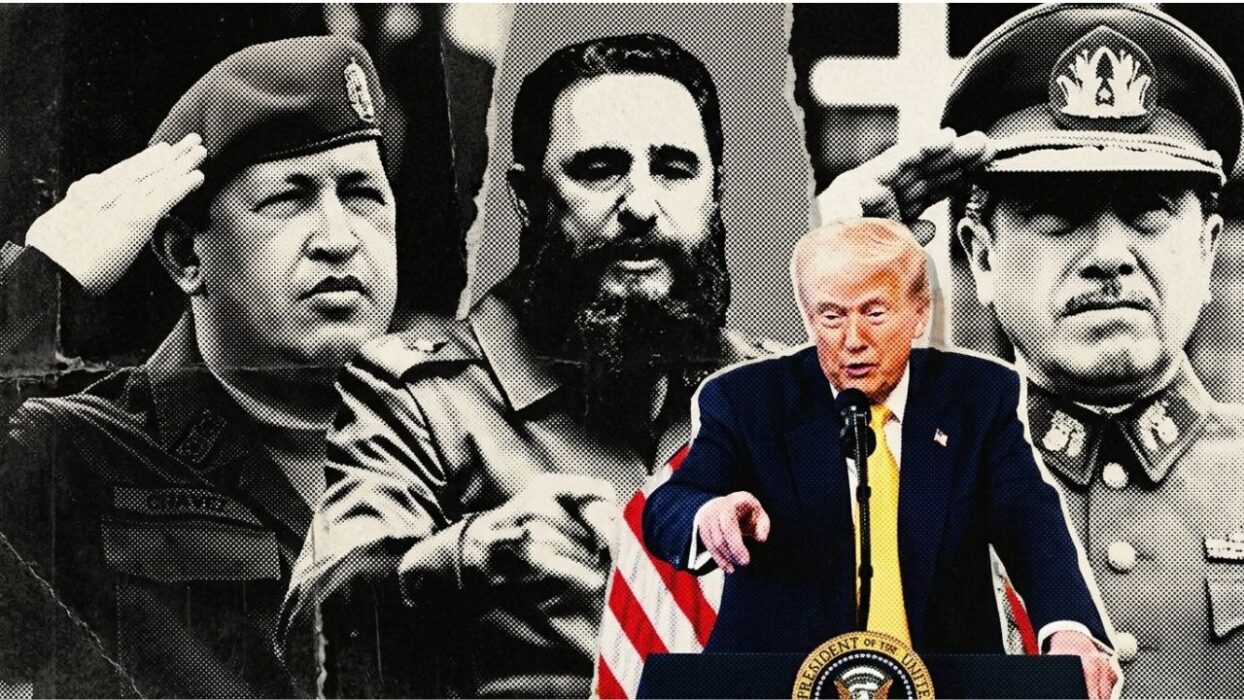
Fidel Castro did it in 1959, Augusto Pinochet in 1973, and Hugo Chávez in 2006. Vladimir Putin began in 2000 and finally shut down the last remaining media outlets in 2022. Regardless of whether they called themselves right-wing or left-wing, communists or fascists, they all followed the playbook to the letter: censoring media outlets that did not align with their governments’ narratives.
Now, in 2026, Donald Trump—though unable to do exactly the same thing—has taken a step in the same direction.
Donald Trump Said ‘Get Out’
In what many are calling “the most direct attack on the First Amendment,” the U.S. president barred CNN, MS NOW, and Politico from the White House last Friday, revoking their journalists’ press credentials.
Under the banner of his never-ending “fake news” campaign, Trump wrote on social media that the media is “corrupt, purposeful, pervasive, fully coordinated, and totally out of control. It is a threat to our national security, and must be stopped, NOW!”
In response, the three media outlets have filed a lawsuit invoking the First Amendment to regain access. As CNN reported, the request is urgent and will be presented to a federal judge in the U.S. District Court for the District of Columbia. The lawsuit could lead to hearings and legal arguments from the administration as early as this week.
“This ban could not be a more direct assault on the First Amendment nor a more blatant violation of our most fundamental constitutional principles,” the news outlets said in their lawsuit, which asks the court to act immediately to restore their journalists’ access to the White House.
“This morning, we notified the government that we are filing a lawsuit today to protect our First Amendment rights and defend the principle that the government does not decide what the press reports or publishes,” the three news organizations said in a joint statement on Monday.
“The ban inflicts harm on all news media organizations—which now risk a similar fate if they engage in fact-based, independent reporting that the President deems insufficiently favorable,” the news outlets said in a request for a temporary restraining order filed on Monday.
“And the general public suffers for as long as the unconstitutional ban restricts access to current and complete information about the government.”
The Rest of the Press Corps Refused to Play Along
In an unexpected move, and in protest of the ban, ABC, CBS, NBC, and Fox News refused to participate in the White House press pool—the rotating group of journalists, photographers, and videographers who document the president’s public events. Many humorously noted how, as a result, Trump could barely be heard during Monday’s inauguration ceremony for the new White House heliport—a spot-on metaphor for what happens, at least aesthetically, when the media is absent.
However, the second significant step toward authoritarianism came on Monday night.
Just as Castro, Chávez, Pinochet, and Putin did before him, the Trump White House launched a nascent presidential television network on YouTube called “Trump TV: The Essentials Station.” The administration stated that the new network would broadcast videos and highlights from its own activities.
America’s Free Press Has Always Been Tangled Up With Its Independence
Without going too far back in history, the press in what we now know as the United States has been directly linked to the people’s sense of independence and autonomy. Ever since Thomas Paine published “Common Sense” in 1776, the British colonial government has understood the impact words and ideals can have when they reach the masses. So much so that the British Crown targeted printing presses and ink before attacking revolutionaries on the battlefield.
It is no surprise that the term “fourth estate,” attributed to the press, emerged in the 18th century, when the drive for independence and democracy swept across the European continent. It refers to the capacity—beyond disseminating news—to influence politics and keep power in check. The term originates in the traditional European concept of the three estates of the realm: the clergy, the nobility, and the common people. Today, it would be the fourth estate after the executive, legislative, and judicial branches.
Today, authors such as Yochai Benkler argue that an equivalent exists. Benkler, whose 2006 book The Wealth of Networks laid the groundwork, described “the networked Fourth Estate” in a May 2011 article published in the Harvard Civil Rights-Civil Liberties Law Review. In it, he explains the growth of non-traditional journalistic media on the Internet. For Benkler, this refers to practices, organizational models, and technologies associated with a free press that provide public oversight of the branches of government.
How Far Can Trump Actually Go?
The short answer, according to KTLA law and politics expert Jessica Levinson, is not far. “This is a bedrock principal [sic] of the First Amendment… The First Amendment protects us against the government,” Levinson said on KTLA 5 Morning News Monday.
In their lawsuit, the three outlets explain the Constitution, they wrote, “does not allow a president or any other government official to deprive the press of their First Amendment rights and liberty and property interests with no notice or process based solely on his dislike of the content of their reporting.”
But is every version of this equally illegal? Not quite, according to Levinson. She said whether a president can bar specific reporters from Air Force One or the Oval Office may be a gray area. An outright ban on White House coverage, she said, is a clear violation. “When the president says, ‘I don’t like their coverage, it’s negative coverage and therefore [sic] they’re out of the White House,’ that is the quintessential moment where the First Amendment acts in its most robust protection,” she said.
So how far can Trump actually go? Not this far, at least not legally, and not without a fight already underway in the U.S. District Court for the District of Columbia.
What Happens When the Public Can’t See What Its Government Is Doing
In summary, the media, in addition to amplifying the facts—with or without the filters of editorial subjectivity—keeps the government under scrutiny, bringing its decisions (or lack thereof) to the forefront so that the audience can judge for itself. But what happens if the vast majority of the audience disagrees? What happens when information and critical analysis give the audience the tools to criticize and decide—say, in a midterm election—that this is not the government that represents them?
Worse still, what happens when a people is blind to what the government plans to do, or lacks visibility into the decisions being made on their behalf?
Unfortunately, the United States seems on the verge of finding out.