
Latin America’s Immediate Response to Aid Venezuela Proves Our Humanity Knows No Borders
The world has a habit of treating Latin America like a cautionary tale. A region defined by its corruption, its instability, its tragedies. But three days after a double earthquake leveled parts of Venezuela, the region immediately answered with speed, sacrifice, and an unwillingness to wait for permission to help.
As of June 29, more than 1,450 people had died, and thousands more had been injured since the magnitude 7.2 and 7.5 earthquakes struck northern Venezuela on June 24, with the toll still climbing as search efforts continue. The damage is estimated at $6.7 billion, or roughly six percent of the country’s gross domestic product, according to a satellite assessment by the United Nations Development Program. But within hours, before the world’s wealthiest governments had finished drafting statements, Latin America was already on the ground.
How Latin America Showed Up for Venezuela Within Hours
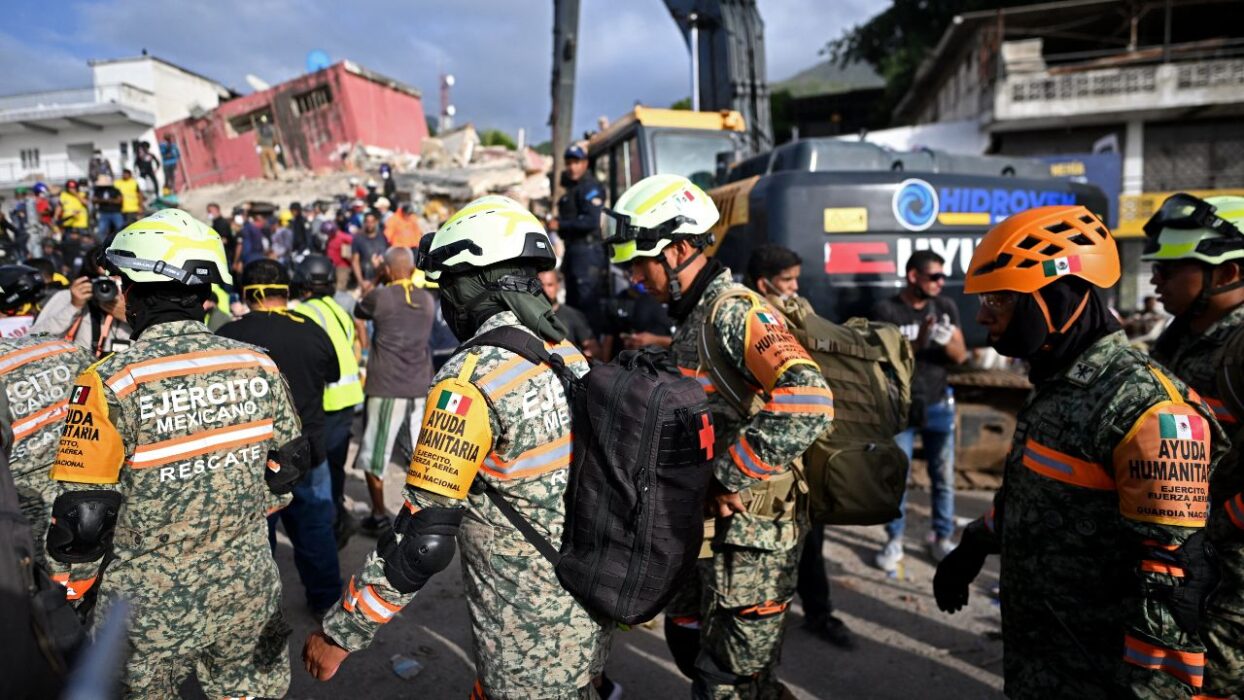
More than 2,000 rescue workers from 27 countries deployed to Venezuela to search for survivors trapped under the rubble, in an effort coordinated by the United Nations, according to the UN’s Office for the Coordination of Humanitarian Affairs. At Venezuela’s request, 44 international urban search and rescue teams sent 2,245 specialists and 140 search dogs to extract survivors and provide initial medical care.
The list of countries that sent rescuers reads like a map of the Americas: Argentina, Brazil, Canada, Chile, Colombia, Ecuador, El Salvador, Guatemala, Mexico, Panama, Peru, and the Dominican Republic, alongside teams from Germany, Spain, France, the United States, and more than a dozen other nations.
El Salvador Sent Six Planes Because Venezuela Once Did the Same for Them
El Salvador was the first country to reach Venezuela’s earthquake zone, according to Luis Amaya, director of the country’s Civil Protection agency, in an interview with Infobae. President Nayib Bukele ordered the mission to prioritize saving human lives, and the country has since sent six planes, 300 rescuers, and 150 tonnes of humanitarian aid.
The Salvadoran team includes members of the armed forces, the Humanitarian Rescue Unit, Civil Protection, the fire department, the national police, the health agency FOSALUD, the Red Cross, and the Green Cross. The team made its first rescues within hours of arriving and later coordinated with crews from other countries as they reached the disaster zone.
Amaya told Infobae that El Salvador’s own history with natural disasters shaped how quickly it responded, but he also pointed to something more personal. In 2001, Venezuela sent aid to El Salvador after two earthquakes struck. The current mission, he said, is as much an act of reciprocity and historical memory as it is a humanitarian one. Every member of the Salvadoran team brought their own food, medicine, and equipment, operating under a principle Amaya summarized simply: arrive to solve problems, not create them.
Mexico’s 80-Year-Old ‘Topo Mayor’ Has Been Digging Through Rubble for 40 Years
Héctor Méndez is 80 years old, and he has now responded to three disasters in Venezuela over three decades: the 1997 Cariaco earthquake, the 1999 Vargas landslide, and the twin earthquakes of June 2026, according to reporting by El Informador and La Silla Rota.
Méndez founded Topos Aztecas, an international rescue group named for the way its members burrow through collapsed buildings like moles searching for survivors. He became a rescuer after the 1985 Mexico City earthquake, when he searched for his own brother in the rubble and found him alive, according to EFE. He wears the flags of Haiti, Mexico, Italy, Argentina, the United States, and other countries on his uniform, each one representing a disaster he has responded to in 40 years of this work.
Méndez arrived in Venezuela on June 26 with a team of trained search dogs and went straight to Los Palos Grandes, a residential and commercial area in Chacao, the Caracas municipality hardest hit by the earthquakes. There, he and his team assessed the ruins of a residential building known as Petunia, one of three buildings that collapsed completely in the municipality, according to Chacao Mayor Gustavo Duque. Another 80 buildings in Chacao sustained damage, and the borough has recorded 35 deaths and 28 rescues, Duque told EFE.
“Today, what we’re finding are deceased individuals,” Méndez said of the search at Petunia, explaining that his team’s dogs can distinguish between the living and the dead beneath the debris. He told EFE that recovering a body with dignity, rather than quickly, is the priority. Removing a single piece of concrete from around someone’s arm can take hours, he said, but the goal is to deliver the body whole to the family waiting for it.
Brazil, Colombia, and Cuba Didn’t Wait to Be Asked
Brazilian President Luiz Inácio Lula da Silva announced his country would send a field hospital along with dozens of firefighters and support personnel, according to Al Jazeera. Brazil deployed a military transport plane carrying 36 firefighters and eight risk assessment and telecommunications specialists, along with nine tonnes of equipment, Lula said on social media. A second flight followed with equipment to assemble an open-air hospital, 100 solar-powered water purifiers, and medical supplies for surgeries.
Colombia, which felt the earthquakes itself, sent more than 60 rescuers and 12 tonnes of humanitarian aid, according to the country’s disaster management agency. Cuba mobilized its health workers to provide medical services to those affected, Foreign Minister Bruno Rodríguez said. Mexican President Claudia Sheinbaum confirmed her government sent a military team of rescuers and medical personnel, with more available if needed.
The World Sent Help Too, But Latin America Got There First
Countries far beyond the region also responded. France deployed 85 search-and-rescue specialists, and President Emmanuel Macron called it an expression of solidarity with the Venezuelan people. Spain sent a government plane carrying search-and-rescue teams, and Switzerland mobilized 80 personnel, rescue dogs, and 18 tonnes of equipment. Germany pledged six military transport planes, and India sent two air force aircraft carrying a 41-member medical team and a field hospital unit. The Vatican sent an initial $114,000 in emergency aid, and the International Federation of Red Cross and Red Crescent Societies released $2.5 million for recovery efforts.
But it was El Salvador’s rescuers who reached the coast first, and Mexico’s Topos Aztecas who were already kneeling over the rubble of Petunia, long before the rest of the world’s planes had cleared the runway.
Why Venezuela’s Earthquake Could Cost $6.7 Billion It Doesn’t Have
The earthquakes exposed approximately 8.6 million people to moderate or severe shaking, including 2.1 million who experienced the strongest tremors, and damaged or destroyed roughly 1.7 million structures, according to UNDP’s satellite-based assessment. “The speed and accuracy of initial assessments are essential for an effective response,” said Luis Francisco Thais, UNDP’s resident representative in Venezuela.
That response has unfolded inside a country already strained by years of corruption and economic collapse, conditions that have made it harder for aid organizations to move funds or pay workers through Venezuelan banks. Decades of underinvestment, particularly in the oil industry that once funded the country, have left it with little capacity to rebuild on its own.
What Latin America’s Response Says About the Region
A region that the world so often reduces to its worst headlines spent the last several days proving its humanity knows no boundaries. From El Salvador to Argentina, none of these countries had to come. They came because the history between Latin American nations runs deeper than any one government’s failures, and because solidarity, here, has never needed an invitation.